
Smalti mural and micromosaic for the Atom pavilion at VDNH
For the Atom pavilion at VDNH in Moscow we made two very different mosaics: an 8 m² smalti mural in the spirit of Soviet monumental art, and a micromosaic of 5×5 mm tesserae set into the facade of an exhibition diorama.
- Location
- VDNH, Moscow, Russia
- Year
- 2023
- Area
- 8 m² (200×400 cm)
- Material
- ArtWorker smalti
- Technique
- Direct method; micromosaic by the indirect (reverse) method
- Design
- Main mural sketch by Kirill Tarasov
The main mural
In autumn 2023 a client came to our studio with an approved sketch by Kirill Tarasov and a clear idea: a smalti mural in a set style, close to Soviet mosaic. On top of the main mural, a micromosaic was needed for one of the exhibition's dioramas.
We chose and approved a sample of the assembly technique. The main mural was set from a medium module of 15×17 mm, which suited the Soviet look perfectly. We then put together a palette of our own smalti to match the artist's sketch. Once it was approved, we made the smalti in the required colours and quantities at our own production site, which saved a great deal of time in getting the material.
The base was OSB, cut into four parts in advance so the finished mosaic would be easier to transport. The sketch was glued onto the base, mesh was laid over it, and the mosaic was set on top by the direct method in Kerabond T cement-based tile adhesive, using wheeled mosaic nippers.
The mural used about 200 kg of smalti, a bag of cement-based adhesive and a latex additive to make the mix stronger and more elastic.
Installation in the pavilion
The hardest stage was installation on site. The mural was taken apart, packed, delivered to the Atom pavilion at VDNH and fixed to the prepared wall.
The micromosaic for the diorama
The micromosaic was born while the main mural was being approved. Among the exhibits were dioramas, and the facade of one of them was meant to carry a mosaic image, but only as a print. After a short discussion it was agreed to make a real mosaic in a very small module instead.
We already had some finely cut smalti left from an earlier project; the rest we cut by hand with wheeled nippers. The task was demanding: the mosaic had to follow exactly the outlines of templates supplied by the model makers, and then fit into recesses cut into the diorama facade along those same outlines. We did not have the model wall itself, so we assembled the image against the templates alone.
The micromosaic was set by the indirect (reverse) method, face down on adhesive film, then carefully transferred onto fine mesh with Titan mounting adhesive. We chose a silicone-based adhesive because it kept the fragments flexible after pre-mounting and made the final fixing to the model easier.
Final fitting
Final installation took place in the workshop where the models were made, again on silicone mounting adhesive. It was not straightforward: when we brought the finished fragments in, some of them did not fit the cut recesses, so we took part of the elements apart to place them on the base and complete the installation.
The finished mural and micromosaic are in the Atom pavilion, whose exhibition opened on 4 November 2023.
Project gallery
23 photos — click to enlarge.
How we can make it for you
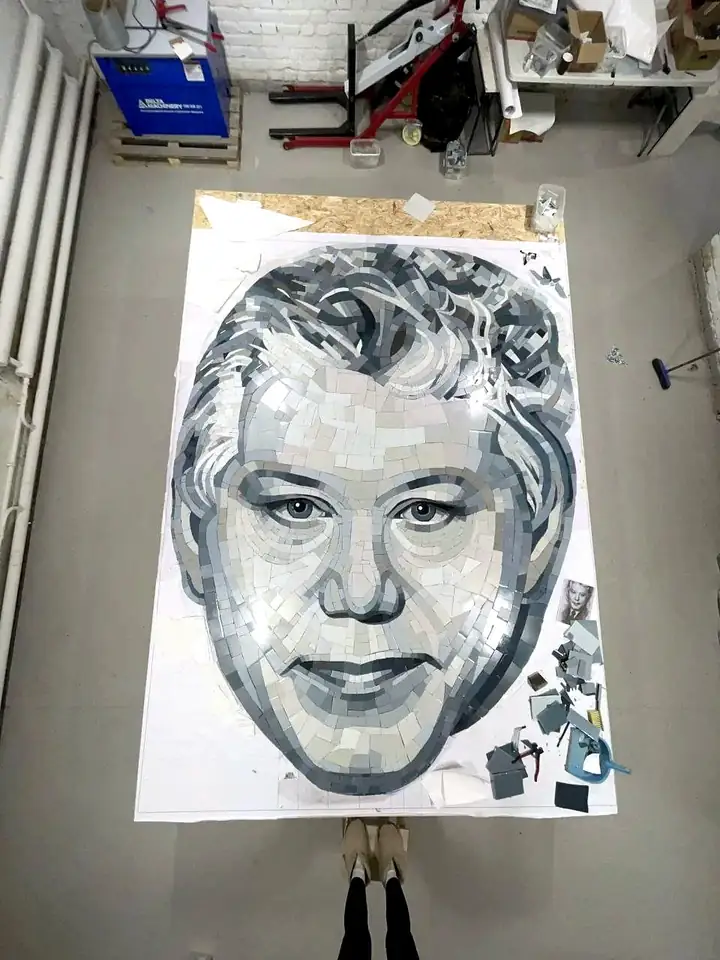
Custom smalti murals
We make murals in smalti from our own furnace for interiors, facades, swimming pools and fountains. Sketch, assembly in the studio, packing, shipping and installation by our own team.
From $1,230 per m²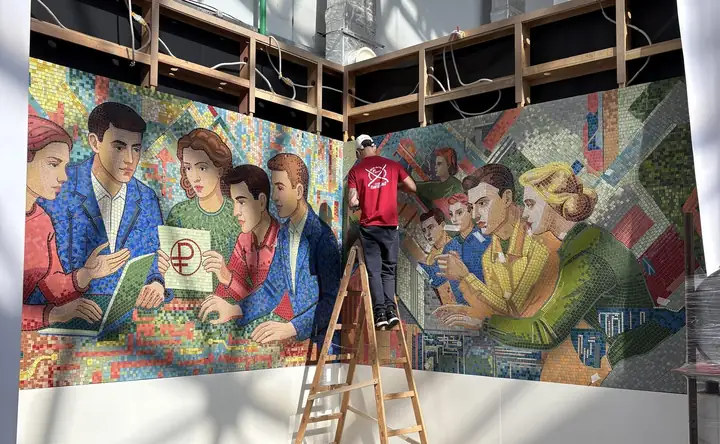
Custom mosaic murals
We make mosaics in our own smalti, natural stone and glass mosaic tile, from a bathroom mural to building facades, church icons and monumental works. Sketch, production, shipping and installation, turnkey.
From $860 per m²Similar projects
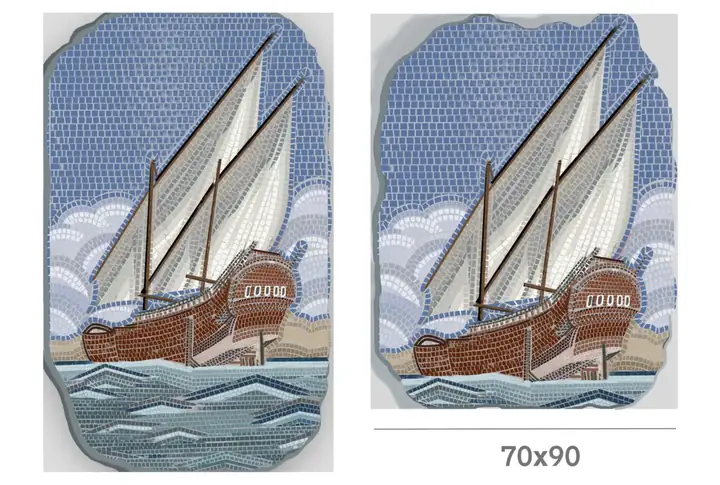
A sea-themed smalti mural for a private client in Muscat, Oman
In winter 2024 a private client in Muscat, Oman, asked us for a sea-themed smalti mural based on a picture they had found online. We developed a sketch for the Roman technique, approved samples and palette within a week, and assembled and delivered the 0.7 m² mural in the shortest possible time.
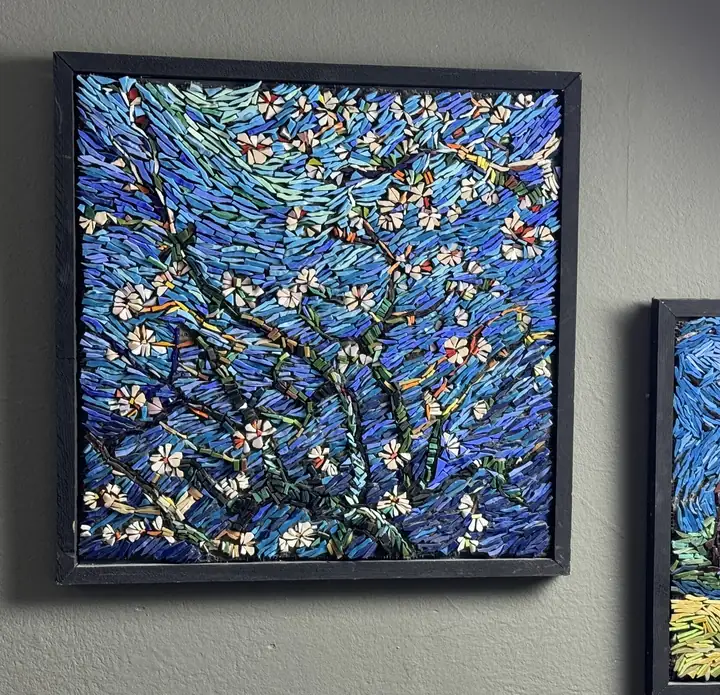
A smalti mural for a modern bathroom: a copy of a Soviet mosaic fragment
For an apartment bathroom we made a 2 m² mural in ArtWorker smalti: a copy of a fragment of a Soviet mosaic, in a restrained palette that sits naturally in a modern interior. From smalti production to finished panel took 14 days.
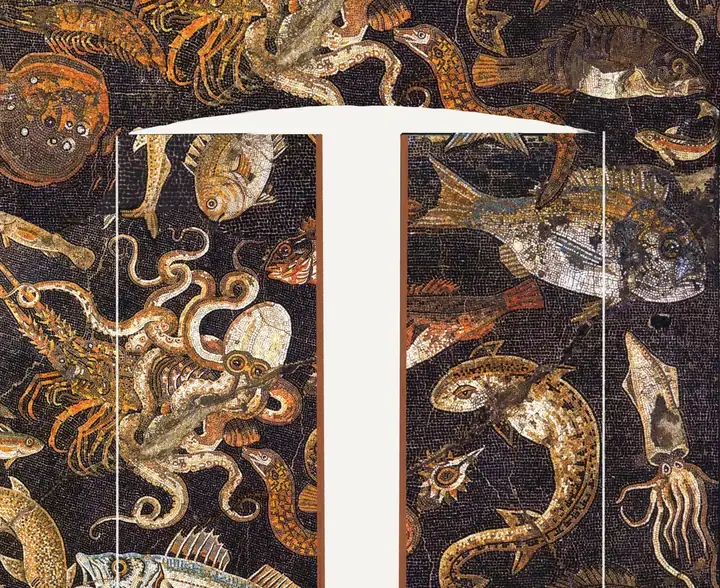
A classical Roman mosaic for a bar in central Moscow
A private client opening a bar in central Moscow wanted part of its walls covered in mosaic in the Roman technique, based on classical Roman subjects. We had 60 days before the opening to make and install almost 13 m² of natural stone and smalti.
Like this project?
We will make a mosaic like this for your space: an artist proposes a sketch, a manager calculates the cost and timeline. The consultation is free.