
A stained glass mosaic portrait from an AI-generated sketch
An experiment in our Moscow studio: a mosaic portrait whose sketch, and even the choice of material, came from a neural network. We made it in stained glass and glass mosaic tile, following the AI's layout piece by piece.
- Location
- ArtWorker studio, Moscow, Russia
- Material
- Stained glass and glass mosaic tile
- Technique
- Indirect (reverse) method, clear epoxy grout
Finding the sketch
Our studio recently built up a large archive of new, vivid images created with the direct involvement of artificial intelligence. From everything the neural network generated, we picked the most sensual series and started editing a sketch from it.
After adapting the portrait to our style and selecting a palette, we began work. Since the whole point was to test new approaches to making mosaic murals, the final sketch and the choice of material were left to the neural network. It suggested stained glass and glass mosaic tile, which kept all the richness of colour of the original image and gave the work a more painterly quality.
The indirect (reverse) method
We chose the indirect (reverse) method to keep the surface of the mosaic smooth. The tesserae are laid face down on a special adhesive film, which makes the moment of turning the finished work over all the more exciting.
When the assembly is complete, mesh is laid over the mosaic and the whole surface is covered with an adhesive chosen for how the panel will be used. In our case it was clear epoxy grout. Once it has fully cured, the work is turned over, the film removed and the joints grouted again where needed. Grout can be any colour, depending on the artistic task; we use clear in about 90% of cases because it is the most versatile. Grouting and fixing on epoxy kept all the brightness of the glass.
Materials and tools
The main material is stained glass. Its tone can vary across a single sheet, so we built the palette around the main colours. It is easy to work and offers great variety of colour, which allowed a very painterly effect.
Glass mosaic tile, mostly in opaque colours, was the second material. It added depth and saturation, and its small module filled background areas with almost no extra cutting, which made assembly much faster and simpler.
We worked with several types of wheeled nippers, reinforced Italian nippers and nippers for stained glass, as well as a glass cutter and a special running plier for stained glass. True to the experiment, we kept as closely as possible to the layout set by the neural network, trimming each piece to the shape it required.
What we learned
Our aim was to get as close as possible to the style and technique set by the AI. We managed it thanks to a clear, well-made sketch and the right choice of materials and tools. The result shows that experiments like this can lead to bright, inspiring work.
Working with neural networks can speed up the process and open new options, but it is help with the work, not the work itself. The artist still chooses the palette, selects and adapts the material to the style, and understands how a mosaic is made. AI does not replace artists; it widens what they can try. We consider the experiment a success and may use what we learned in future projects.
Project gallery
11 photos — click to enlarge.
How we can make it for you
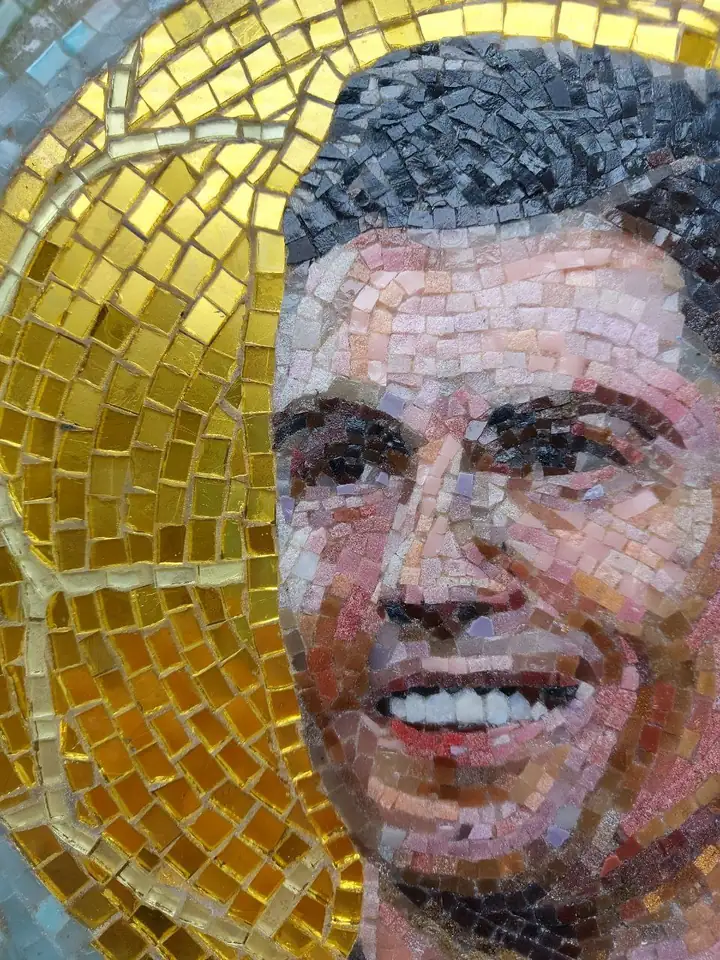
Custom mosaic portraits
We make portraits from your photograph in smalti, glass mosaic tile or natural stone, from a small framed piece to a portrait set directly on the wall.
From $1,590 per portrait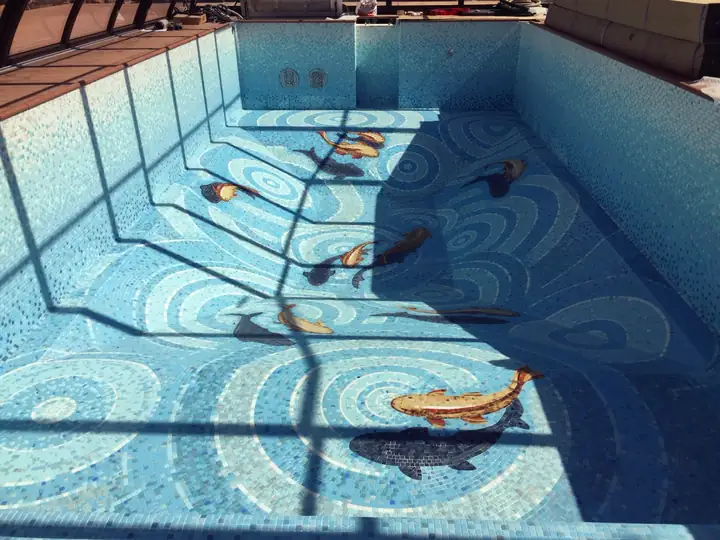
Glass mosaic murals for pools, bathrooms and interiors
We make artistic glass mosaic for swimming pools, interior murals, bathrooms and kitchen splashbacks, working from your sketch or designing an original one to your brief.
From $930 per m²Similar projects
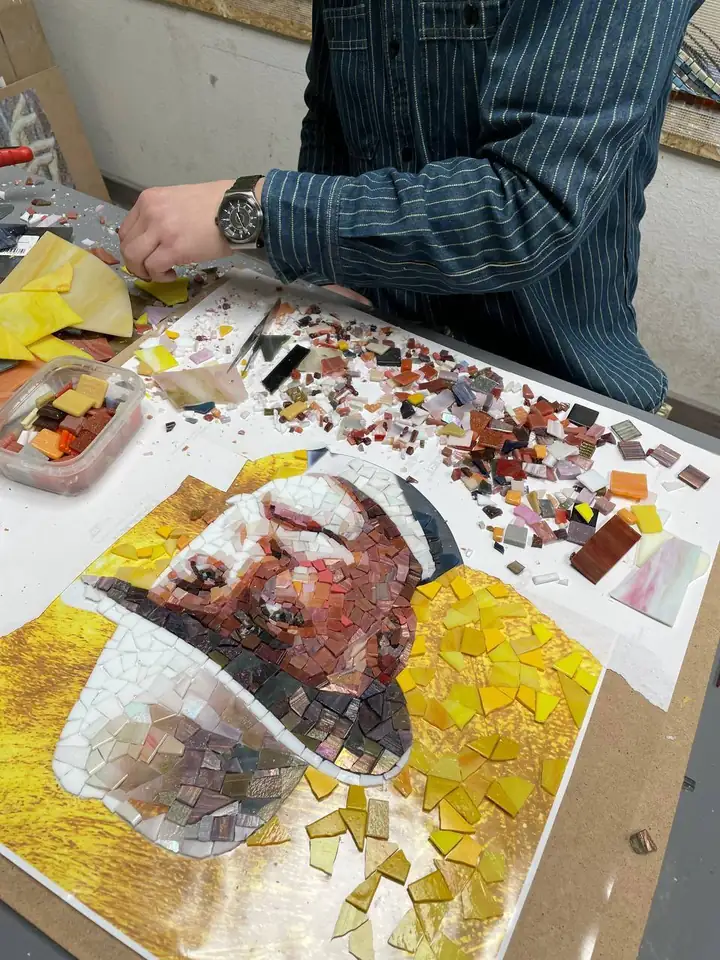
A realistic mosaic portrait of a man on a gold background
In winter 2023 a client asked us to make a realistic mosaic portrait of a man from a black-and-white photograph. Together we arrived at a gold background, and we assembled the 40 × 52 cm portrait in glass mosaic tile and stained glass.
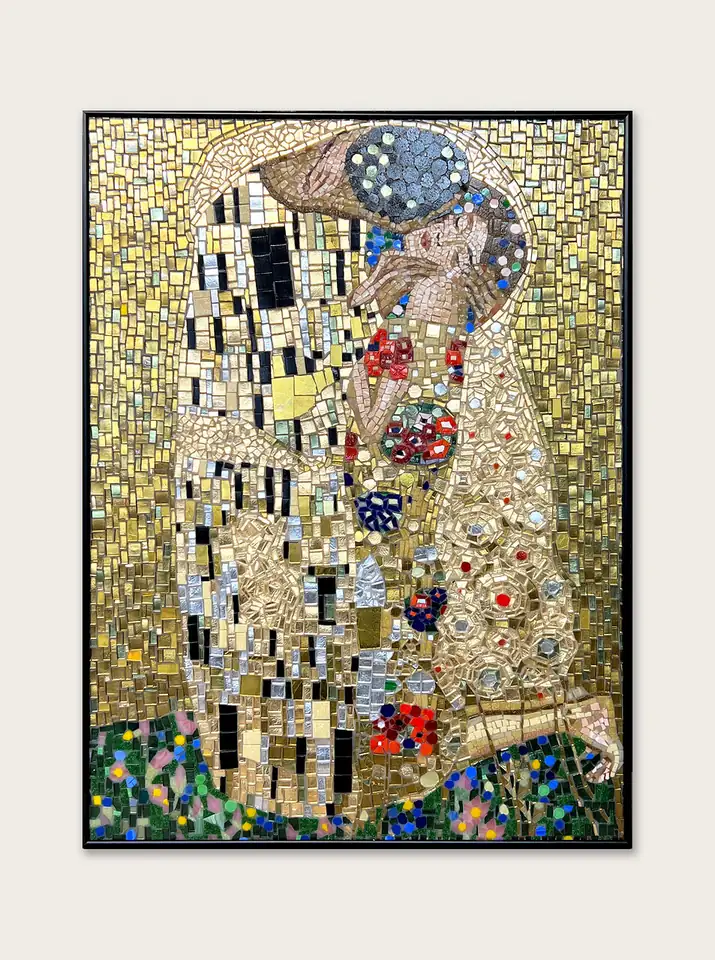
Gustav Klimt's The Kiss in gold, smalti, glass tile and stained glass
LITOKOL commissioned a mosaic after Gustav Klimt's The Kiss to show its epoxy product, used here as both adhesive and grout. We combined smalti, glass mosaic tile and stained glass in one framed panel.
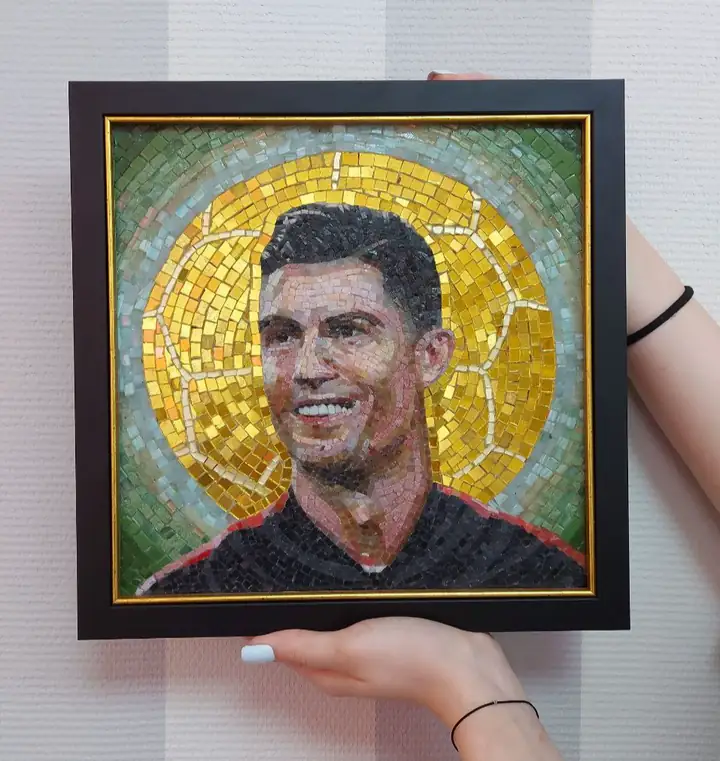
Cristiano Ronaldo portrait in micromosaic with smalti and gold
A photographically precise portrait of Cristiano Ronaldo, set in 1–4 mm modules of smalti, glass mosaic tile and gold in our Moscow studio. The background echoes the Portuguese flag, and a golden ball nods to his victories.
Like this project?
We will make a mosaic like this for your space: an artist proposes a sketch, a manager calculates the cost and timeline. The consultation is free.