
Cristiano Ronaldo portrait in micromosaic with smalti and gold
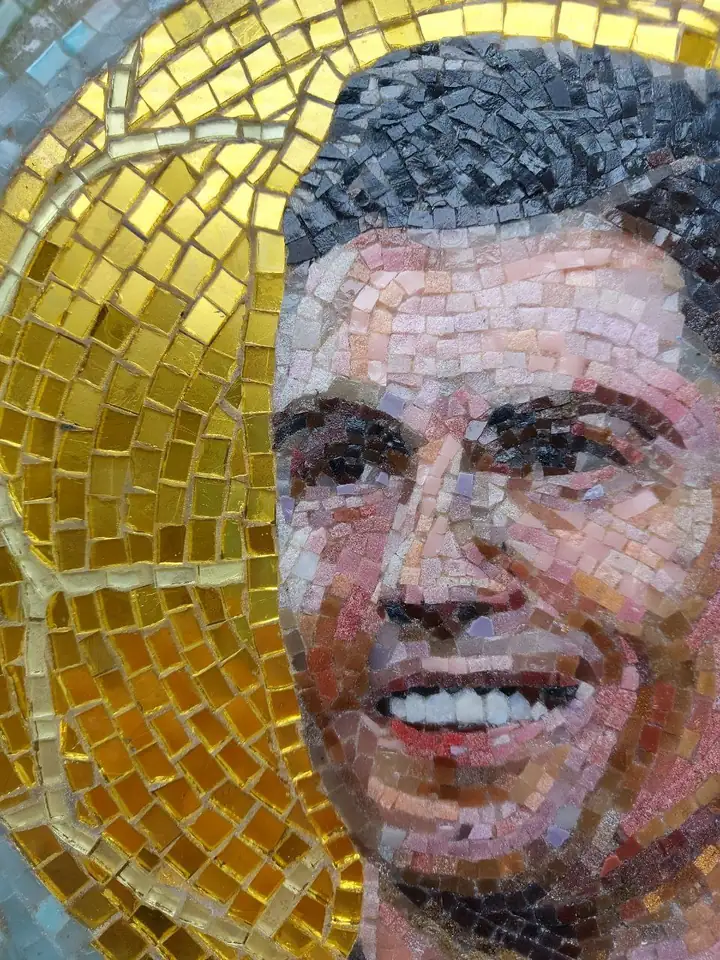
A photographically precise portrait of Cristiano Ronaldo, set in 1–4 mm modules of smalti, glass mosaic tile and gold in our Moscow studio. The background echoes the Portuguese flag, and a golden ball nods to his victories.
- Material
- Smalti, glass mosaic tile, gold smalti and silver-based gold smalti
- Technique
- Micromosaic by the indirect (reverse) method
- Time
- 30 days
- Design
- Sketch by Daria Pervushina
The sketch
As always, we began by formulating the idea and putting it on paper. The sketch is by Daria Pervushina. After a long sketching process we settled on the final version.
We wanted a classic, photographically accurate portrait with a twist that would underline the footballer's character and ambition. The colours of the background refer to the flag of Portugal, and the golden ball adds contrast and alludes to Ronaldo's victories and success.
Indirect method for a micromosaic
Although this is a micromosaic, we chose the indirect (reverse) method, which gives the smoothest possible surface once the mosaic is mounted. With the indirect method the image must be mirrored, because the face of the work is underneath. We cover the sketch with a special adhesive film and set the mosaic on it.
The background is a mixture of smalti and glass mosaic tile, which gives a smoother gradient and an interesting surface texture. Two kinds of gold were used: gold smalti and silver-based gold smalti.
Fixing and mounting
In micromosaic the module is extremely small and unstable, so this fragile structure has to be well secured. For that we use ordinary gelatine.
When the setting is finished, we cover all the smallest areas with a hot gelatine mixture to protect them. When the gelatine is fully dry, the whole surface is covered with mesh, then with an adhesive chosen for the conditions the piece will be used in; here it was a clear epoxy grout.
Once it has fully dried, the work is turned over, the adhesive film is removed with gentle heat, and the remaining gelatine is wiped off with boiling water. If needed, the joints are grouted again; we used the same colour. The finished portrait was framed in a moulding chosen to match its colours.
About micromosaic
Micromosaic is one of the most demanding areas of mosaic art. It takes the most effort, but it is also one of the most impressive techniques, because it makes the most natural, painterly effect possible. Micromosaic has been known since antiquity, mostly in jewellery; today we can adapt it to contemporary work.
Project gallery
9 photos — click to enlarge.
How we can make it for you
Custom mosaic portraits
We make portraits from your photograph in smalti, glass mosaic tile or natural stone, from a small framed piece to a portrait set directly on the wall.
From $1,590 per portrait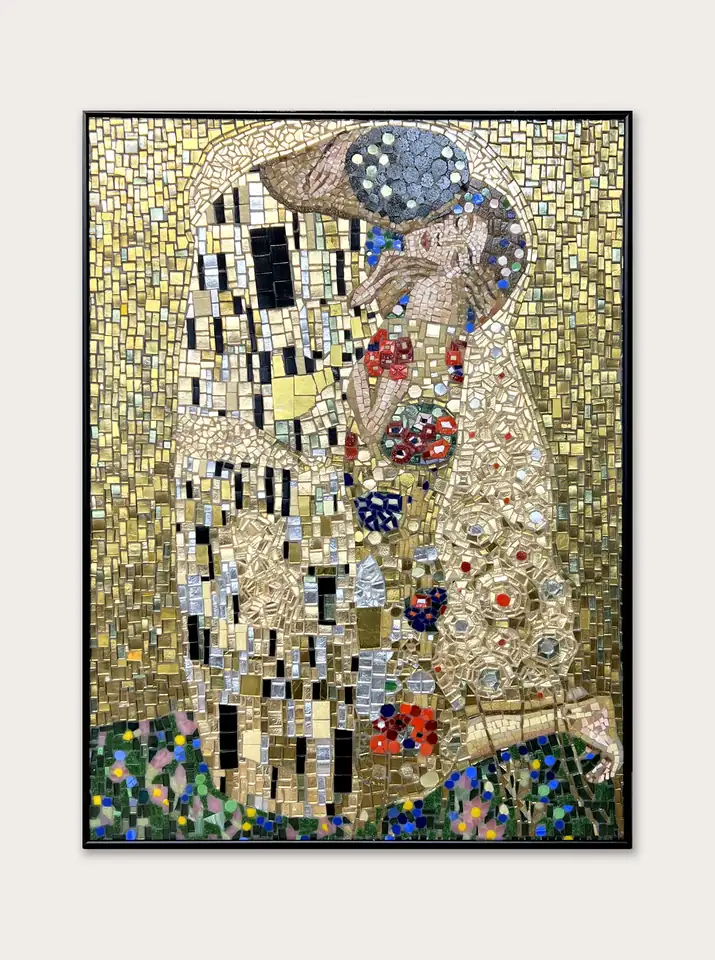
Mosaic artworks to order
We make mosaic artworks in smalti from any image you choose, or design an original sketch to your brief: a colour accent for a home, hotel or office, framed or installed on the wall.
From $900 per m²Similar projects
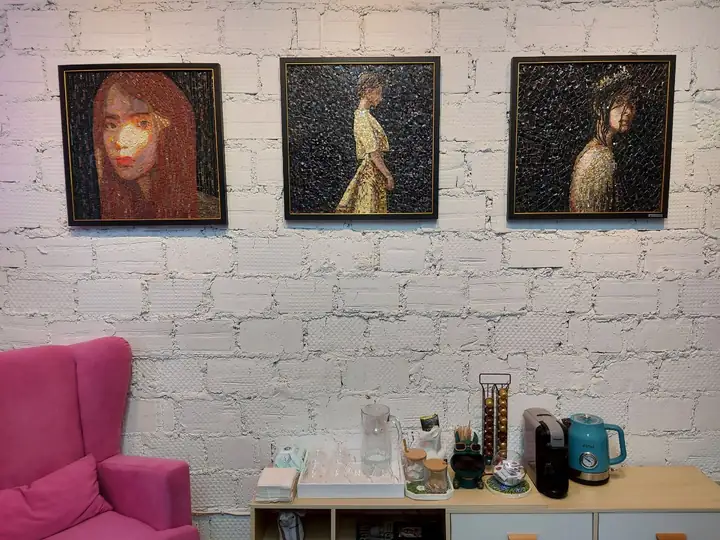
Golden Hour: a triptych of mosaic portraits in smalti, glass and gold
Golden Hour is one of the studio's own creative projects: a triptych of portraits about warm evening light, assembled from ArtWorker smalti, gold, glass mosaic tile and natural stone by the double indirect method.
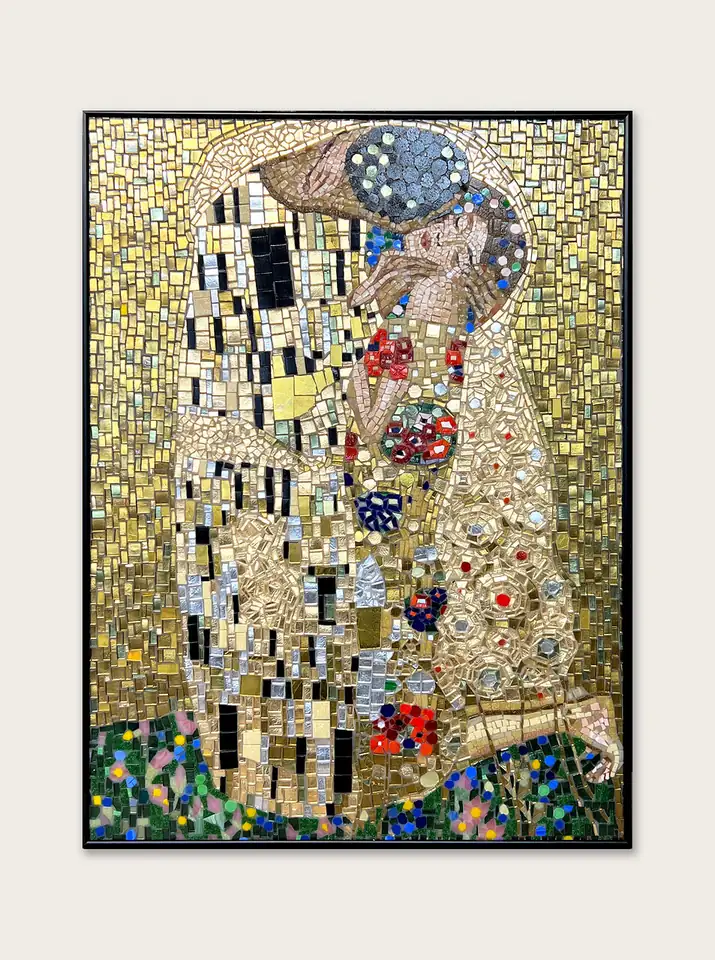
Gustav Klimt's The Kiss in gold, smalti, glass tile and stained glass
LITOKOL commissioned a mosaic after Gustav Klimt's The Kiss to show its epoxy product, used here as both adhesive and grout. We combined smalti, glass mosaic tile and stained glass in one framed panel.
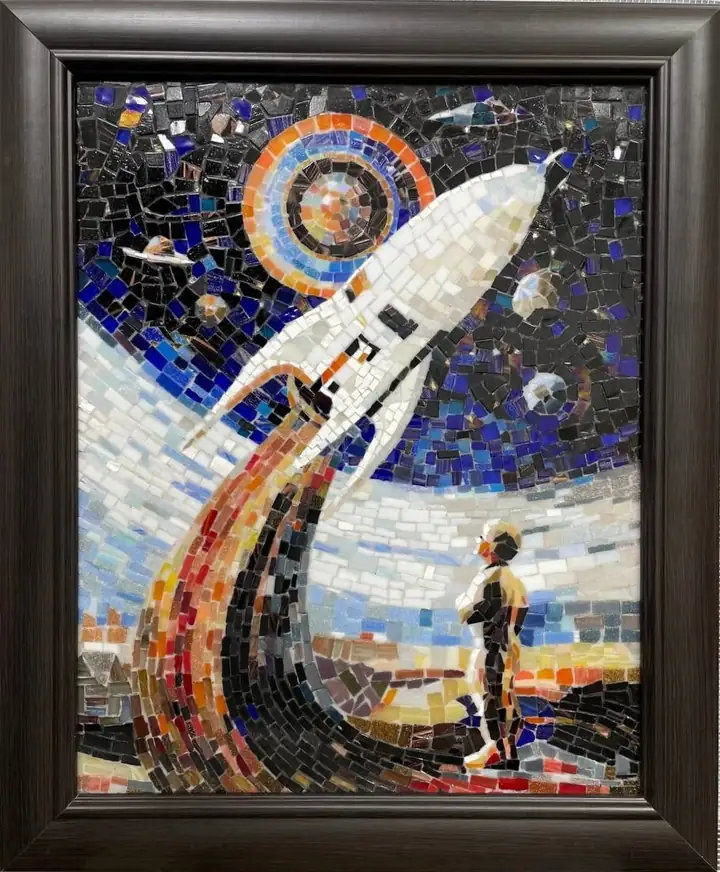
Space-themed mosaics from AI-generated sketches
A client brought us two striking sketches generated by AI: a boy cosmonaut watching a rocket launch, and a man holding a newborn planet under the stars. We made both as framed mosaics in glass tile and smalti, with modules as small as 1 mm, in eight days.
Like this project?
We will make a mosaic like this for your space: an artist proposes a sketch, a manager calculates the cost and timeline. The consultation is free.