
Restoring Boris Chernyshev's mosaics from the Pervomaisky cinema, Moscow
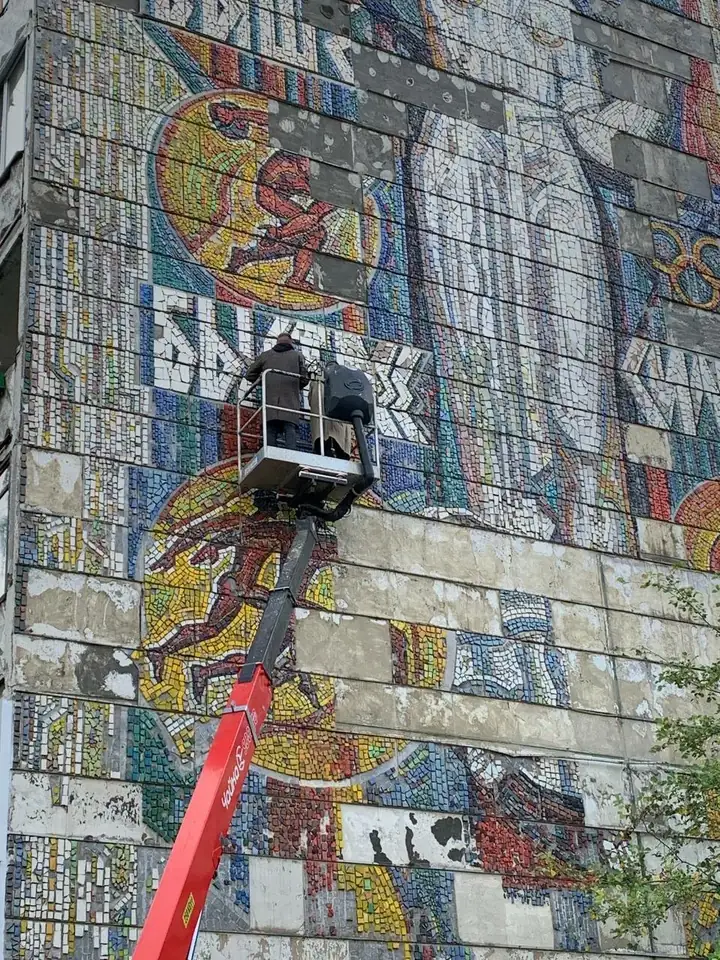
The Pervomaisky cinema in Moscow was demolished in 2020, but the mosaic and relief panels by Boris Chernyshev, his last work, were saved. We moved them, panels of up to 800 kg, to a new exhibition hall, restored them and installed them on the walls.
- Location
- Moscow, Russia
- Material
- Smalti and natural stone on gypsum relief panels
- Technique
- Injection consolidation, biocide treatment, reintegration of mosaic and paint layer, installation
- Design
- Boris Chernyshev
The cinema and the artist
The Pervomaisky cinema, built in 1969, was the first cinema with an open, column-free vault, an idea that became the basis of a new standard design for such buildings. Its interiors were decorated with mosaics, reliefs and paintings by the monumental artist Boris Chernyshev.
Chernyshev worked on the decoration of Komsomolskaya metro station, took part in designing the Ministry of Foreign Affairs building on Smolenskaya Square and made the mosaics on the pilasters of the Pioneers' House on Miusskaya Square. By some accounts he was the model for the famous statue of Yury Dolgoruky on Tverskaya Street. His works are in the collection of the Tretyakov Gallery, and the Pervomaisky cinema was his last work.
The cinema closed in 2010. In 2017 it was included in a city programme to replace Soviet cinemas with shopping centres, and in December 2020 the building was demolished. Chernyshev's panels were saved, and the new shopping centre has a dedicated hall to display them. We were brought in to restore, prepare and install them.
Condition and moving the panels
At our first survey the panels had already been removed and were stored in wooden crates at the Volgograd cinema in Vykhino. They showed clear traces of earlier repainting, many areas of mosaic were lost, parts of the relief were chipped and the paint layer was dusty and lost in places. There was biological damage too, from mould to mouse droppings.
We decided to move the panels to the exhibition site without opening the crates, restore them there and then mount them on the walls. The panels weighed up to 800 kg and the hall was on the fourth floor. The construction lifts were not yet working, so the panels were brought in by crane through a balcony. Once the crates were opened we found numerous cracks in the panel bases, chips and losses in the supporting layer.
Consolidation
From the survey we drew up a programme for restoration and installation. The first task was to deal with the cracks and to secure areas of mosaic that had lost their bond with the base: cracks and voids were filled with adhesive by injection.
Each area was prepared first: debris and dust were removed mechanically with scalpels and bristle brushes, mould and fungus were cleared and the surface was treated with a biocide. Once the adhesive had set, the cracks were filled with a gypsum mortar matching the original. Rust stains were treated with a special solution and removed mechanically.
Reintegration and installation
Using samples, we matched the missing smalti and stones, and surviving photographs allowed us to restore the mosaic design. The losses and abrasions in the paint layer were also restored from photographs, and small chips in the sculpted relief were filled with gypsum mortar matching the original.
Some panels were very heavy, so we developed a special installation and fixing design. They were raised with vehicle winches and mechanical lifts and mounted on a supporting structure. After installation we concealed the joints between panels and toned them. The panels are now displayed in the exhibition hall and will be open to visitors after the official opening.
Project team: Daria Krylova, Sergey Krachkovsky, Nunik Barsegyan, Sergey Kudrin, Kirill Pavlukhin, Anatoly Baryshnikov, Philipp Shkurko, Taras Stivkin.
Project gallery
10 photos — click to enlarge.
How we can make it for you
Similar projects
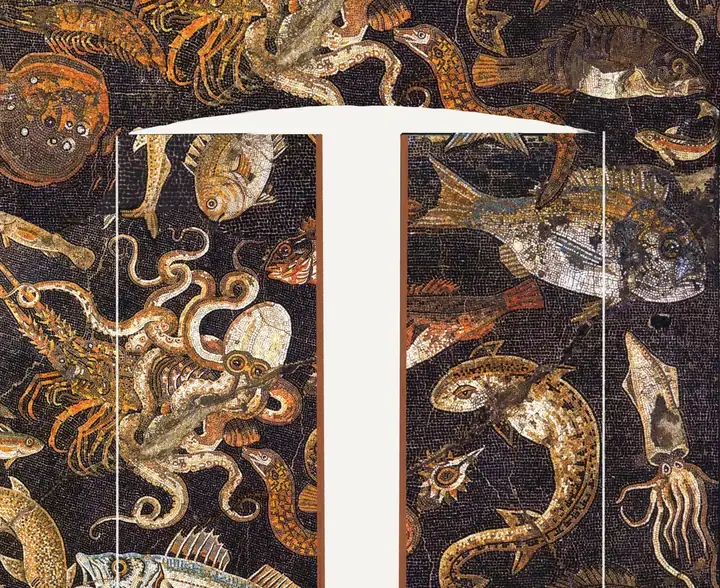
A classical Roman mosaic for a bar in central Moscow
A private client opening a bar in central Moscow wanted part of its walls covered in mosaic in the Roman technique, based on classical Roman subjects. We had 60 days before the opening to make and install almost 13 m² of natural stone and smalti.
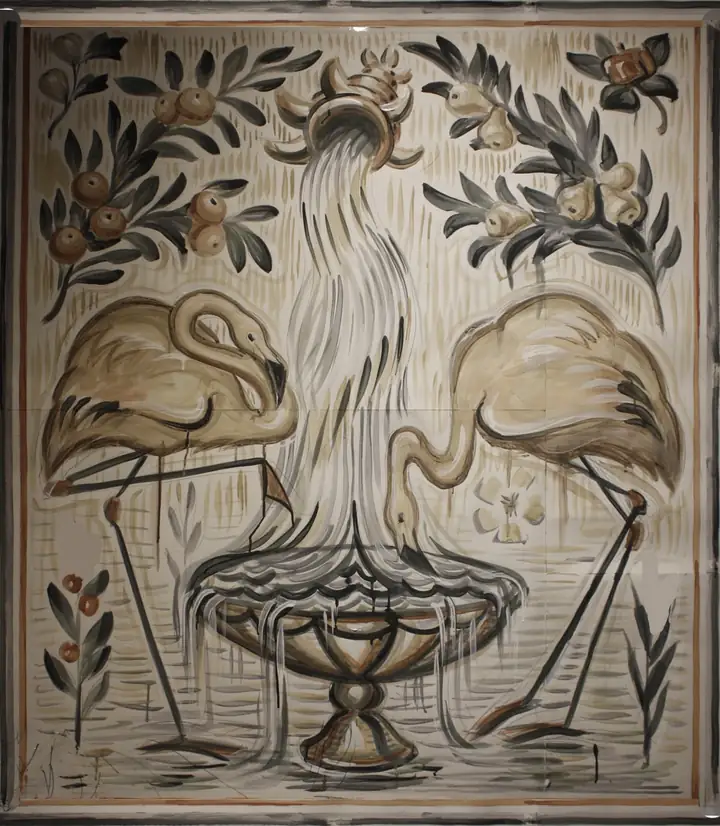
Flamingo: a marble and smalti mosaic for a shower room
A turnkey mosaic for a shower room: natural stone laid the way it was in the Roman Empire, but with richer colour. We designed the sketch, chose marble and smalti, assembled the Flamingo mural and installed it in about 30 days.
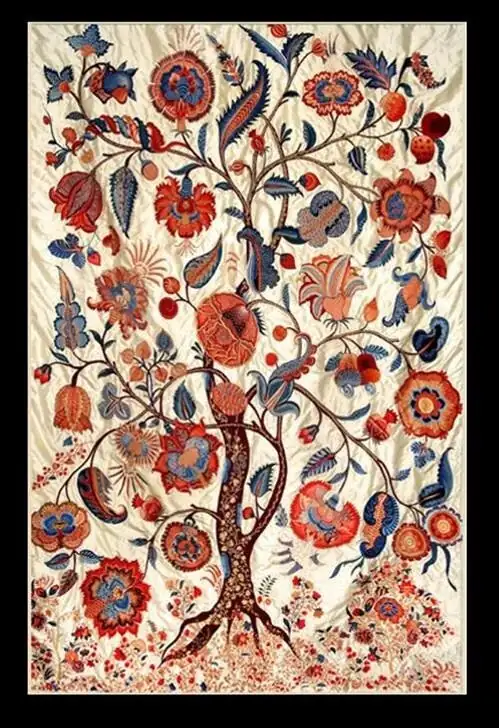
Tree of Life: a stone and smalti mosaic for a hammam
A bright 1×2 m Tree of Life mural for a hammam, in natural stone and smalti. Based on a Soviet mosaic, it became the centrepiece of a room already finished in marble mosaic.
Like this project?
We will make a mosaic like this for your space: an artist proposes a sketch, a manager calculates the cost and timeline. The consultation is free.