
Restoring the 1975 mosaics of a pedestrian underpass in Lipetsk
The mosaics of a 1975 pedestrian underpass in Lipetsk, made to sketches by Mikhail Vinogradov, show the city's symbols, ships and the imprint of Peter the Great's palm. In 2025 we surveyed them and restored their lost and broken tiles.
- Location
- Lipetsk, Russia
- Year
- 2025
- Material
- Mosaic tile; replacements made in our smalti works, plus unused original period tiles
- Technique
- Consolidation, cleaning, injection, replacement of damaged tiles, toning
- Design
- Sketches by Mikhail Vinogradov; architect Yuri Serov
The underpass and its mosaics
The underpass was built in 1975 as part of a large development programme for Lipetsk, initiated by the city authorities with the architect Yuri Serov. Its mosaics were based on sketches by Mikhail Vinogradov, then one of the leading Soviet decorative painters, and draw on the history of the region.
They show the city's symbols and coats of arms and maritime scenes linked to shipbuilding and trade routes. A special place belongs to the imprint of the palm of Peter the Great, whose decision in 1703, during the Great Northern War, laid the foundations of the future city. In the 2006 film 'Zhivoy' (dir. Alexander Veledinsky) the hero places his hand on this very imprint.
Survey
Our restoration artist first came to Lipetsk on 8 February 2025 to examine the mosaics, record them, take measurements and assess their condition. Over the years they had suffered badly: part of the mosaic layer was lost, tiles were cracked, the surface was dirty and covered in graffiti, and tiles were coming away from the adhesive, which put passers-by at risk and needed urgent action.
Most worrying, one of the key scenes survived at only 40%, and many tiles were broken, chipped or cracked by traffic, careless handling and swings in temperature and humidity.
From this we developed a full restoration programme. Lost and damaged tiles would be replaced with exact copies: some made in our smalti works, and some unused original tiles from the same period, which we found and bought, making the restoration far more accurate.
Restoration on site
In June 2025 the team returned to Lipetsk. Work began with consolidating the dangerous areas and cleaning the surface. The joints were the hardest to clean, as the porous grout holds stubborn dirt.
At the same time we rebuilt the lost areas and reconstructed the original design. Damaged tiles were carefully removed and replaced with new ones that match the original. Where cracks in the base were found beneath broken tiles, we consolidated them by injection.
After setting the new tiles we regrouted the joints and toned chips on the original tiles to keep the image whole. Finally the surface was washed again to bring back the brightness of the colours.
A city landmark
The underpass is one of Lipetsk's most important sights and a meaningful place for the whole city. The project was possible thanks to the efforts of many people, and our team thanks everyone involved.
Project gallery
9 photos — click to enlarge.
How we can make it for you
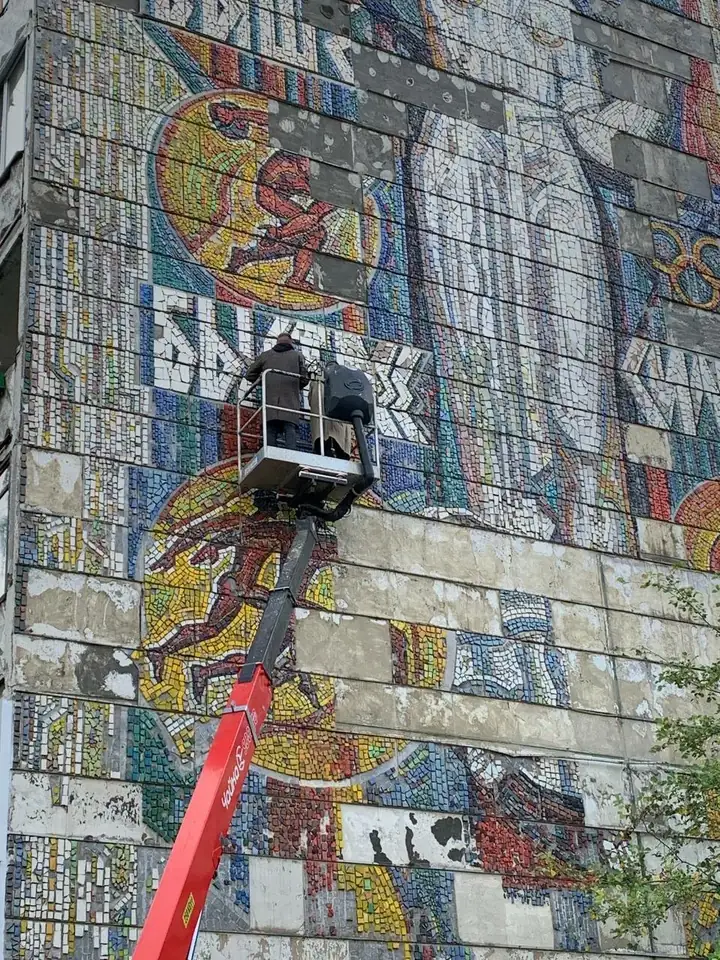
Similar projects
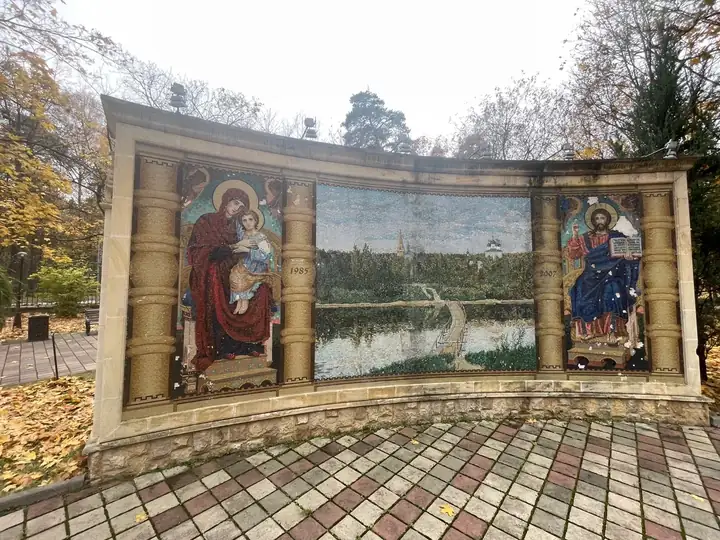
Restoring a glass mosaic triptych in the grounds of a military hospital
On a curved garden wall at a main clinical military hospital stands a glass mosaic triptych with the Virgin and Child, a copy of Levitan's 'Quiet Abode' and Christ. It had been shedding tiles for years; we chose the fastest repair that would keep it safe and on view.
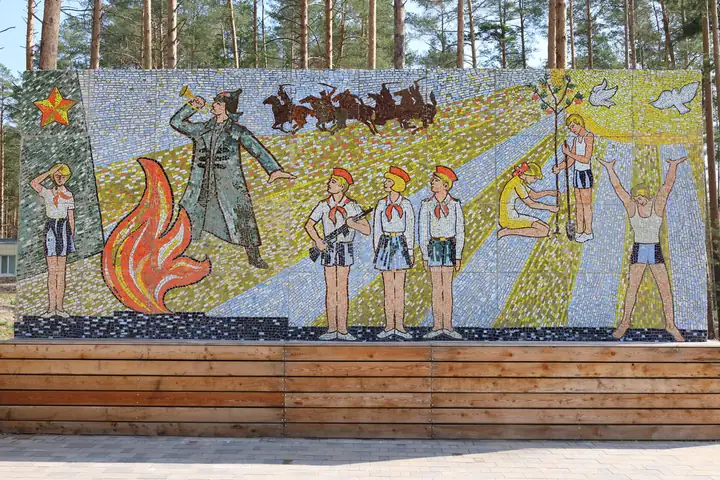
Restoring a Soviet smalti mural at the Mechta children's camp, Tatarstan
A client asked us to restore the Soviet mosaic at the Mechta children's camp in the Republic of Tatarstan, by then worn and broken. We recorded it, drew the missing areas, made about 30 matching shades of smalti and rebuilt the losses on site.
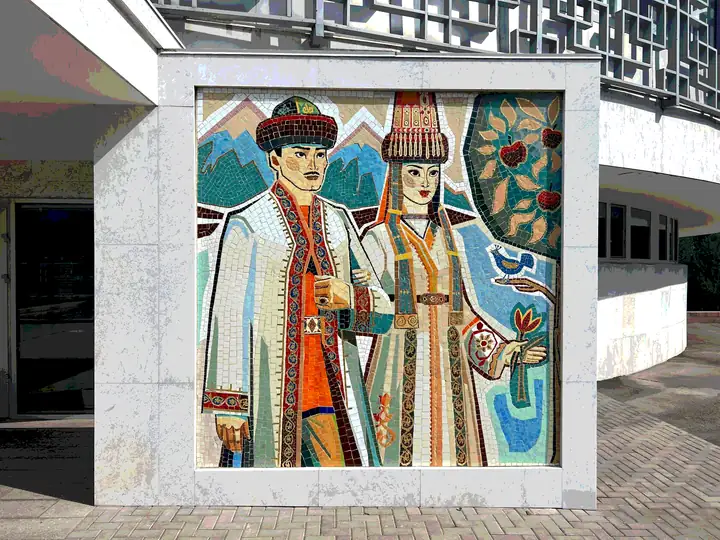
A smalti mural for the Wedding Palace in Almaty
In 2017 we made a 2.7 × 2.7 m smalti mural for the Wedding Palace in Almaty, after a sketch by a local artist. When we visited Almaty in summer 2023 it looked exactly as it did on the day it was installed.
Like this project?
We will make a mosaic like this for your space: an artist proposes a sketch, a manager calculates the cost and timeline. The consultation is free.