
Restoring the smalti mural of the Glory Monument in Nizhny Novgorod
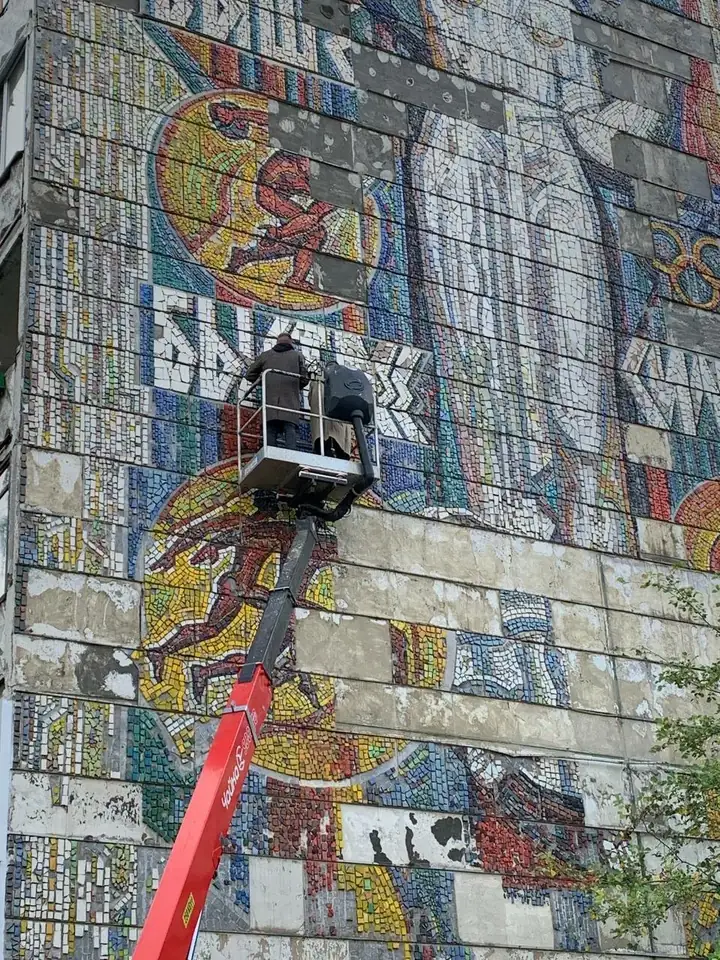
The 1980 Monument of Glory to the car-plant workers in Nizhny Novgorod had lost much of its smalti mosaic over four decades. In one month we cleaned it, rebuilt the failing areas and brought the 220 m² mural back to how it looked on opening day, using original tesserae and 1,500 kg of smalti we made to match.
- Location
- Glory Park, Nizhny Novgorod, Russia
- Area
- 220 m²
- Material
- Original smalti and ArtWorker smalti made to samples
- Technique
- Restoration; smalti tesserae 2 × 3 cm
- Time
- 1 month
The monument
In Soviet times smalti mosaic was widely used to decorate monuments, fountains and buildings. Mosaic is one of the most durable decorative materials, but after decades damaged areas still need restoring, and the Glory Monument in Nizhny Novgorod had lost its original look over more than forty years.
The Monument of Glory with the Eternal Flame was opened in 1980 in the Avtozavodsky district to honour the wartime labour and combat of the car-plant workers. It stands on Lenin Avenue in Glory Park, on a man-made hill at the end of a flower-lined alley. The composition is two joined banners, symbolising the unity of labour and military heroism; their relief steel surface imitates banners in the wind, with a star and a hammer and sickle on the sides. A bronze bowl with the Eternal Flame stands in front.
What we found
The first inspection revealed three kinds of damage:
- Lost smalti: in many places tesserae fell out at a touch, and individual pieces dropped out even in ordinary rain.
- Later repairs: as the mosaic deteriorated over decades, many areas had been painted over, and some gaps had been filled with ceramic tiles instead of smalti.
- Detached plaster: in several areas the plaster had separated from the structure, with a real risk of whole fragments falling.
The restoration
Our aim was to preserve and recreate the mural exactly as it was at the opening. We kept the original smalti and laying technique wherever possible, reusing original tesserae collected around the monument and those that came off during cleaning. The missing material was made to samples in our own smalti workshop, in an authentic look.
Over the years the management company had covered the bare areas with oil paint to make the mosaic look complete. New smalti needs a clean, degreased and primed base, so we removed this paint layer by sandblasting, which also prepared the concrete for laying.
Nobody could tell in advance how many tesserae were loose. During the first high-pressure wash a large number simply washed away, and we found detached plaster in many areas. We started on the left, shaded side, which was in much better condition than the sunny right side. On the sunny side large areas had to be removed completely, re-plastered and laid again from scratch.
The team
Our team includes artists, restorers, procurement specialists and managers, which lets us take on large projects on very tight schedules. The restored mosaic on the monument now looks as it did when it opened in 1980.
Project gallery
18 photos — click to enlarge.
How we can make it for you
Similar projects
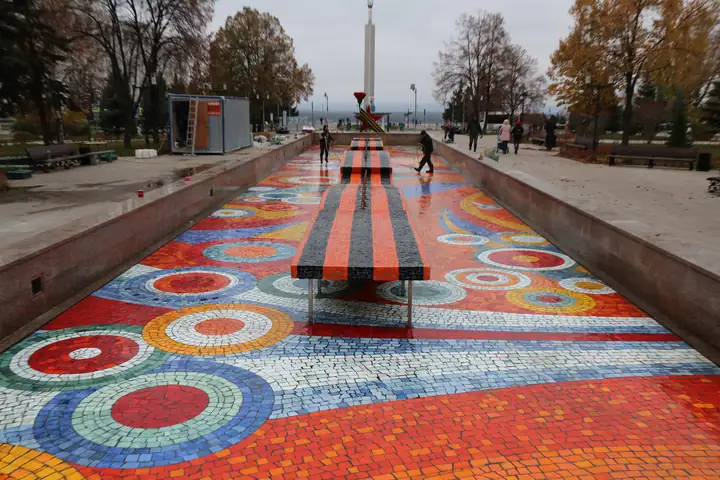
280 m² of new smalti for the 30 Years of Victory fountain in Samara
Restoring the mosaic of the 30 Years of Victory fountain in central Samara is one of the largest projects we have taken part in. In just over four months we developed and melted hundreds of new smalti colours and assembled more than 280 m² of mosaic.
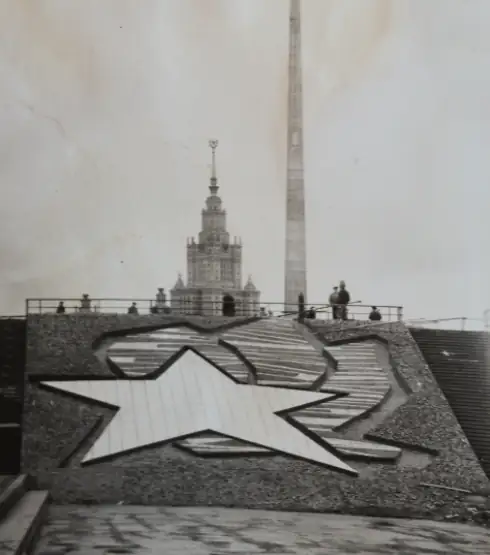
Smalti matched to Soviet samples for the Pioneer Badge monument, Moscow
We are often asked to make smalti for restoring monuments. For the Pioneer Badge on Sparrow Hills in Moscow, we matched red and blue smalti to samples taken from the monument itself and produced about 800 kg of full-size bricks so it could regain its original appearance.
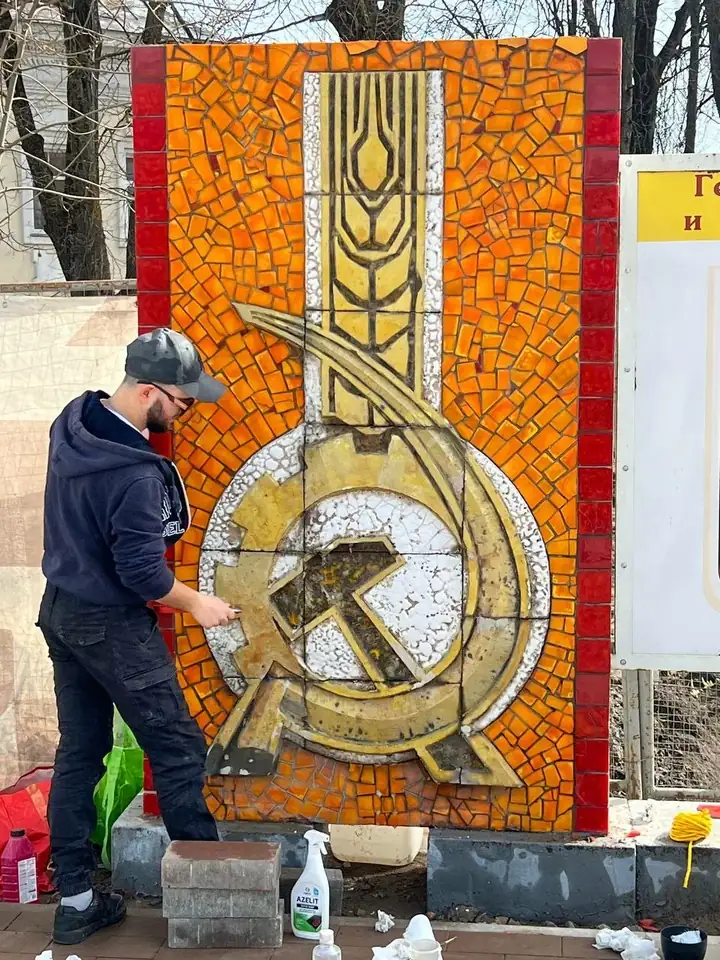
Restoring a Soviet relief mosaic stele in Toropets
Toropets, an ancient town, turned 950 in 2024, and as part of the anniversary improvements we restored the Soviet mosaic stele on its main street, with a hammer and sickle and an ear of wheat in relief on an orange smalti ground.
Like this project?
We will make a mosaic like this for your space: an artist proposes a sketch, a manager calculates the cost and timeline. The consultation is free.